Need Help Now? • 24-hour number 306-525-2141 or 911 • Mobile Crisis Helpline 306-757-0127

Online spaces should be safe for everyone — but too often, they’re not.
Women, girls, Two Spirit, trans, and non-binary people face growing levels of digital hate, harassment, and violence every day.
This can happen anywhere online — on social media, in gaming chats, through text messages, or on apps like rideshares and dating platforms.
Sometimes, technology itself is used to cause harm or control someone. This is called tech-facilitated gender-based violence or cyberviolence.
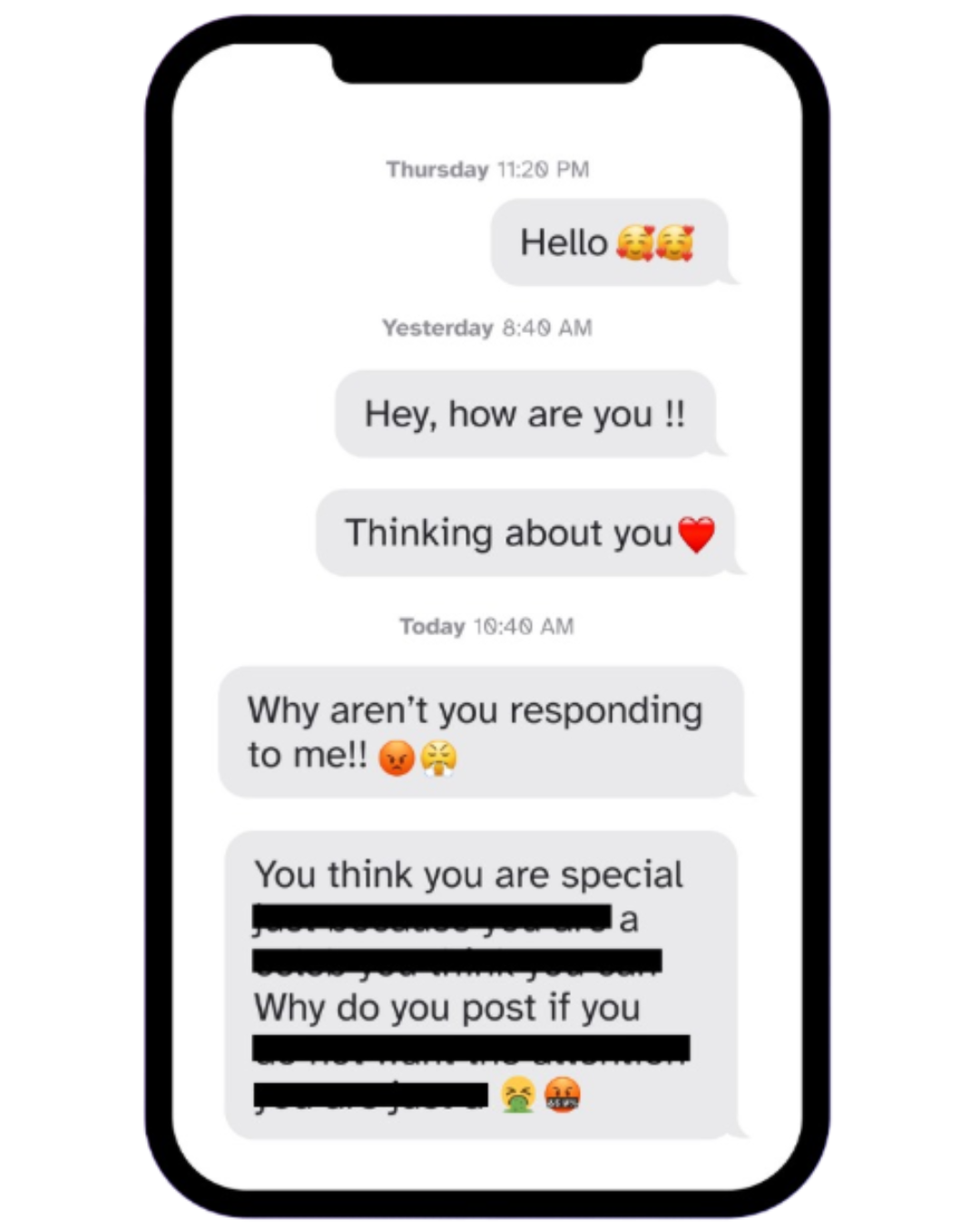
What It Looks Like
Gendered digital violence can include:
When this content spreads online, the harm multiplies. Even if one post is deleted, it can live on somewhere else — forcing survivors to relive the trauma over and over.
Why It Matters
Gendered digital hate and harassment don’t just hurt feelings — they silence voices.
When women and gender-diverse people are targeted, they’re often pushed out of online conversations, jobs, and opportunities to lead.
It’s even harder for those who already face discrimination — including Indigenous women, Black women, and women with disabilities — who are often targeted more often and more severely.
All stats below from: Canadian Women’s Foundation Help End Gender-Based Digital Harm – Canadian Women’s Foundation.
61% of women and gender-diverse people in Canada have faced gendered digital harm, compared to 53% of the general population.
Black, Indigenous, racialized, 2SLGBTQIA+, youth (18-25), and people with disabilities are the most frequent targets, and they all report being targeted because of their unique identities.
30% of Indigenous women experience unwanted behaviour online.
Over 50% of women and gender-diverse people reduce their online presence or self-censor to avoid harm.
48% of women and gender-diverse people experience digital harm on social media, but reporting it often leads to no action.
60% of racialized women and gender-diverse people believe law enforcement is ineffective, and 71% feel social media should have stronger protections as public spaces.
Here are tools you can use right now to protect digital safety:
CLICK each to learn more
“By treating online gender-based violence as the serious issue that it is and challenging it in online spaces (safely), reporting it, or telling someone you trust, we can lessen the damage it can do.”
Government of Canada
Learn how to stop dismissing gender-based violence at Canada.ca/ItsNotJust
Throughout 16 Days of Activism and most specifically, on December 6, we honour the 14 women murdered at l’École Polytechnique de Montréal in 1989 whose lives were taken simply because they were women.
Established in 1991, this day became Canada’s National Day of Remembrance and Action on Violence Against Women.
Join us for Red Rose Day Event: A Day of Remembrance and Action
When: Friday, December 5, 2025 | 11:00 a.m. – 1:00 p.m.
Where: Riddell Centre, University of Regina
Who: YWCA Regina students, staff, and community members
What to Expect:
Join us for a meaningful afternoon of reflection and action as we honour lives lost to gender-based violence and recommit to creating safer communities. The event will feature:
All are welcome.

In Honour Of:
Geneviève Bergeron,
Hélène Colgan,
Nathalie Croteau,
Barbara Daigneault,
Anne-Marie Edward,
Maud Haviernick,
Maryse Laganière,
Maryse Leclair,
Anne-Marie Lemay,
Sonia Pelletier,
Michèle Richard,
Annie St-Arneault,
Annie Turcotte
Barbara Klucznik-Widajewicz
Ending digital gender-based violence starts with awareness and action.
When we speak up, report harmful behaviour, and support survivors, we make digital spaces safer for everyone.
YWCA Regina works every day to build safe, inclusive online communities and to support those affected by digital violence. You can help too.
Donate today to help us raise awareness, provide education, and amplify diverse online voices.
Together, we can end gendered digital hate — and build a world where everyone belongs, online and off.